| Price paid | 10 to 18% more than competitors in our tests |
|---|---|
| Commission | 0%: you receive 100% of the offer |
| Parcel insurance | Up to €100,000 |
| Shipping | Fast and secure, free prepaid label |
| Payment | SEPA bank transfer within 48 hours of agreement |
| If you decline | Free insured return |
| Area | All of Europe, entirely remote |
In brief: with luxury consignment, you wait for a buyer and pay a commission. Selling outright pays you quickly and with no fees, and Ecrila buys at the highest price.
How does consignment work?
- Drop-off. You take the piece to the shop or send it in. It is inspected, then a contract sets the price and the commission.
- Listing. The piece goes on display in the shop or online. It remains your property until it is sold.
- The wait. The sale can be quick for a sought-after piece, or take several months. The price may be reduced, depending on the contract.
- Payment. You are paid after the sale, minus commission. If there is no buyer, you take the piece back.
What a luxury consignment shop accepts
A consignment shop does not take everything. It picks what it thinks it can resell: sought-after brands, recent or iconic models, good condition, accessories included. The rules change from one shop to the next. Some turn down vintage, others insist on a minimum resale price. Many see clients by appointment, and a few will come to you for a large consignment.
Bring ID and anything that shows where the piece came from: receipt, card, box. For luxury clothes and shoes, consignment remains the most common route, especially for recent pieces.
Luxury consignment online or in a shop
A shop offers you personal contact, advice and a place to sell, but it depends on its footfall and its clientele. Online luxury consignment reaches a wider audience, with no need to travel. On the other hand, you sometimes handle more of the process, and fees or return terms vary from one site to another.
The two often go together: a shop may also list your pieces on its website and on other platforms. If you live far away, several consignment shops will value a piece from photos, then receive it by post. In that case, ask who pays for shipping and who insures it, in both directions.
What consignment really costs
Commission is often between 15 and 40% of the sale price. It is calculated on the actual price, not the advertised price: if the price drops, so does your net amount. Here is what that means for a bag sold for €2,000:
Example calculation, not a market value. The actual net amount depends on the contract, the sale price and any additional fees.
There are two ways of calculating it. A flat commission applies the same rate to the whole price. A sliding-scale commission falls in bands as the price rises, so it weighs less on an expensive piece than on a small one. If the shop lists your piece on other platforms, also check what the calculation is based on: the price paid by the buyer, or that price net of platform fees.
How long does consignment last?
The contract often sets a period, for example 90 days at some consignment shops. At the end, you take the piece back, leave it on sale or accept a price cut.
To work out when you will be paid, add up three periods: the time it takes to find a buyer, any cooling-off period that buyer has, then the payment period in the contract, which ranges from a few days to a few weeks depending on the business. A sought-after piece goes quickly. A seasonal model, on the other hand, loses its appeal during the wait.
The pitfalls of consignment
- An over-optimistic starting price. It is flattering at drop-off, but a piece priced too high stays in the window and often ends up reduced.
- No floor price. Without a minimum price in writing, a discount can be given without your agreement. Agree that floor at drop-off.
- Extra fees. Photos, storage, shipping or return: check what comes on top of the commission.
- Delayed payment. Online, the buyer generally has a cooling-off period. Payment may wait until it has passed.
- Taking the piece back. Some contracts set a deadline for collecting it after the consignment ends, sometimes with fees.
- Failed authentication. Ask who pays for the return if the piece is not accepted in the end.
What selling outright changes
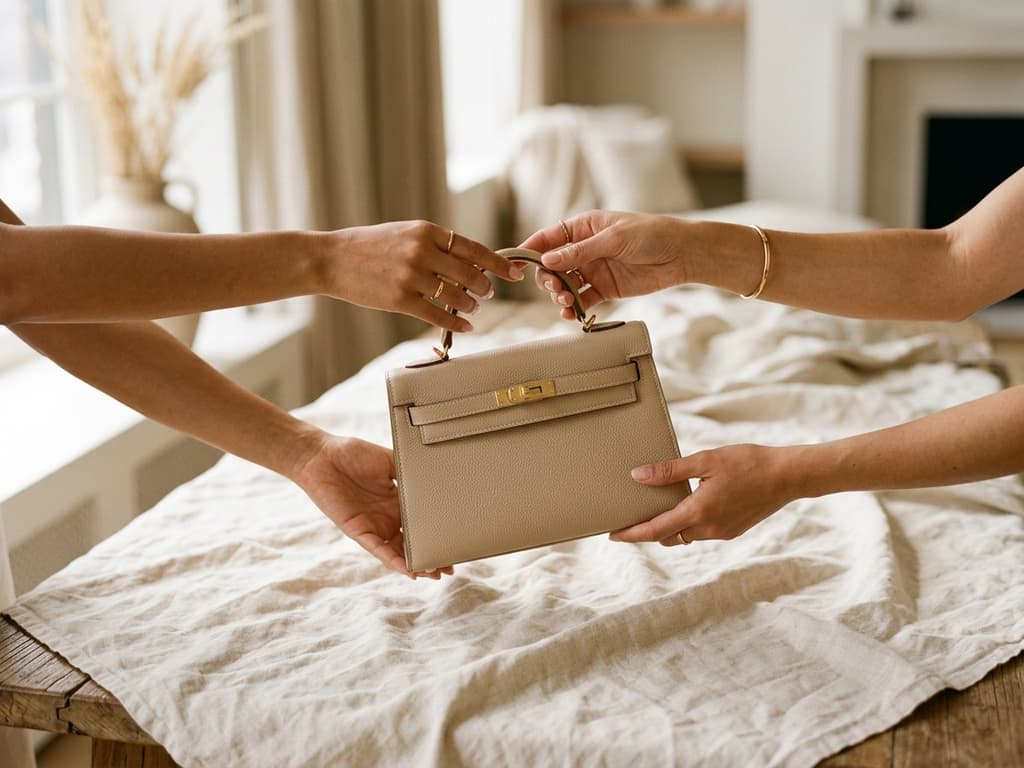
With an outright purchase, a professional buys your piece themselves. There is no listing, no commission and no waiting for a buyer. The amount in the firm offer is the amount you receive, and the professional takes on the risk of reselling.
At Ecrila, we buy at the highest price, and everything is done remotely, with no shop. You fill in a form with 3 photos and an expert gets back to you with an offer. Insured shipping is free. After a hands-on appraisal, the firm offer is confirmed. If you accept it, the SEPA transfer goes out within 48 hours. If you decline it, the piece comes back to you free of charge. We will ask you for ID. To find out more: sell your luxury handbag, sell your luxury watch and sell your luxury jewellery.
Quick comparison
Which route suits your piece?
- Iconic bag in high demand. Consigning a luxury bag can be worthwhile if you are in no hurry. Compare it with a firm offer.
- Seasonal or less sought-after bag. It may stay in the shop for a long time. Selling outright spares you the wait and the price cuts.
- Luxury watch. Many consignment shops focus on fashion. To consign a luxury watch, look for a watch specialist and check the insurance, or choose an outright purchase with insured shipping.
- Signed jewellery. Avoid selling it for its gold weight alone. A specialist buyer or a luxury jewellery consignment service will take the brand and model into account.
- Clothes and shoes. Consignment works well if the pieces are recent and in good condition.
- Need money quickly. Of the two, only selling outright gives you a payment date.
How to choose a luxury consignment shop
Look for a shop that already sells pieces like yours. A fashion boutique will not necessarily have the customers for a Birkin or a collector’s watch.
- Speciality. Look at what it displays and what it actually sells.
- Authentication. Ask who checks the pieces, and how.
- Visibility. Shop only, website, platforms: the wider the audience, the better the chance of finding a buyer.
- Recent reviews. Read those from consignors above all: payment on time, return of unsold pieces, clear communication.
- Transparency. A published commission scale and a clear contract are good signs.
These shops tend to be concentrated in big cities. If there is none near you, remote consignment or selling outright online saves you the trip.
Still undecided?
The two options are not mutually exclusive, and some shops even offer both. Start by asking for a firm offer: it is free and gives you a net figure to work from. Then compare it with the price a consignment shop quotes you, once the commission is deducted, and ask yourself how long you are prepared to wait. You will see what being paid quickly is worth to you.
Questions to ask before you consign
- What is the commission, and which price is it calculated on?
- How long is the consignment period, and what happens at the end?
- Can the price be lowered without your agreement, and down to what floor?
- Is the piece insured during the consignment, and for how much?
- In the event of theft, loss or damage, who compensates you?
- How soon are you paid after the sale?
- Can you take the piece back at any time, and at what cost?
Frequently asked questions
How does consignment work?
You entrust your piece to a shop or website, which authenticates it, agrees a price with you and puts it up for sale. You are paid once it has sold, minus commission. If it does not sell, you take it back or the price is reviewed.
How much commission does a luxury consignment shop take?
It is often between 15 and 40% of the sale price. It varies with the shop, the piece and its price, so always ask for the rate in writing before you hand anything over.
What is online luxury consignment?
It works on the same principle, at a distance: you send the piece in or list it online, and the site handles the sale in return for a commission. You are only paid after the sale.
How long does luxury consignment last?
That depends on the contract and the piece. Some consignment shops set a period of 90 days, others do not. A sought-after piece can go quickly, while another may stay unsold for several months.
Do I still own my piece while it is on consignment?
In principle, yes, until it is sold. That is why insurance and the terms for taking it back matter so much. Read the contract, and take legal advice if in doubt.
Does selling outright pay less than consignment?
No. Compare the net amounts, not the advertised prices: a consignment shop deducts its commission, often 15 to 40%. At Ecrila, we buy at the highest price and you receive a net sum, without waiting for a buyer.
What is the best way to sell a luxury bag?
Selling outright: you receive the highest price, a fixed sum, with no commission and no wait. Consignment remains an option if you do not need a set payment date.
Where can I sell other than Vinted?
For a luxury piece, look at a site that buys outright, a consignment service or a specialist platform. There you will find authenticity checks and buyers looking for this kind of piece.
Which shops take clothes in exchange for vouchers?
Some fashion chains and department stores do, on terms that change often. Ask in store. A voucher ties you to that retailer, so for a valuable piece, compare it with an offer paid in money.
See also our full comparison: where to sell luxury goods and avoid scams.